Architectura AI breaks down the math, models, systems, and real-world workflows behind modern AI — from first principles to production-ready builds.
Built for CS students, ML beginners, developers, and ambitious self-learners entering AI.
The AI field moves at breakneck speed. It's easy to get lost in the noise of daily announcements, new papers, and hype. Architectura AI exists to provide a signal through the noise.
We focus on the fundamental principles, the enduring architectures, and the practical engineering required to build real AI systems. Whether it's understanding the math behind backpropagation or designing a scalable RAG pipeline, we aim for depth over brevity.
Looking for a structured path to understand complex topics from first principles.
Transitioning into AI engineering and needing practical, build-focused knowledge.
Seeking to deepen their understanding of new architectures and system design patterns.
The mathematical and theoretical bedrock required to understand deep learning, linear algebra, calculus, and probability in the context of AI.
Architecture, fine-tuning, retrieval-augmented generation (RAG), and the engineering required to deploy large language models at scale.
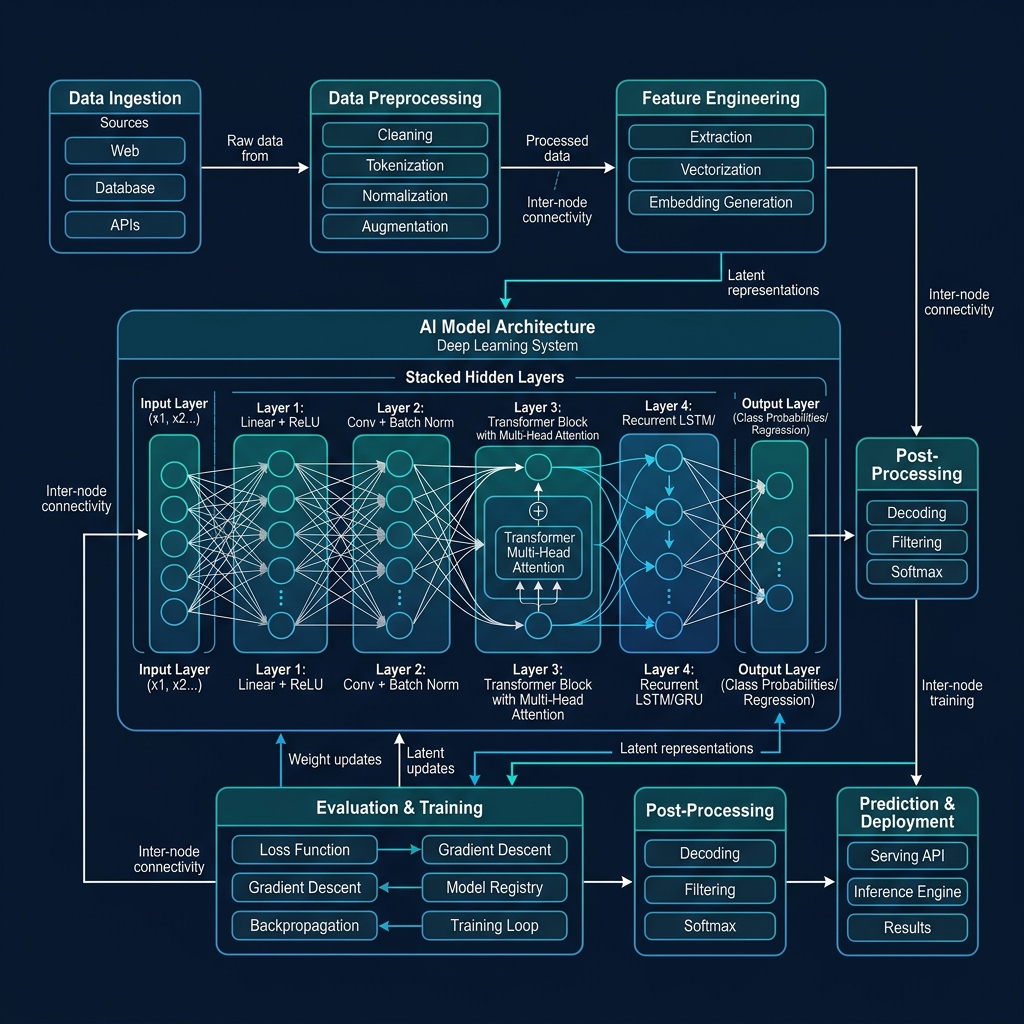
Traditional ML algorithms, neural networks, optimization techniques, and understanding how models learn from data.
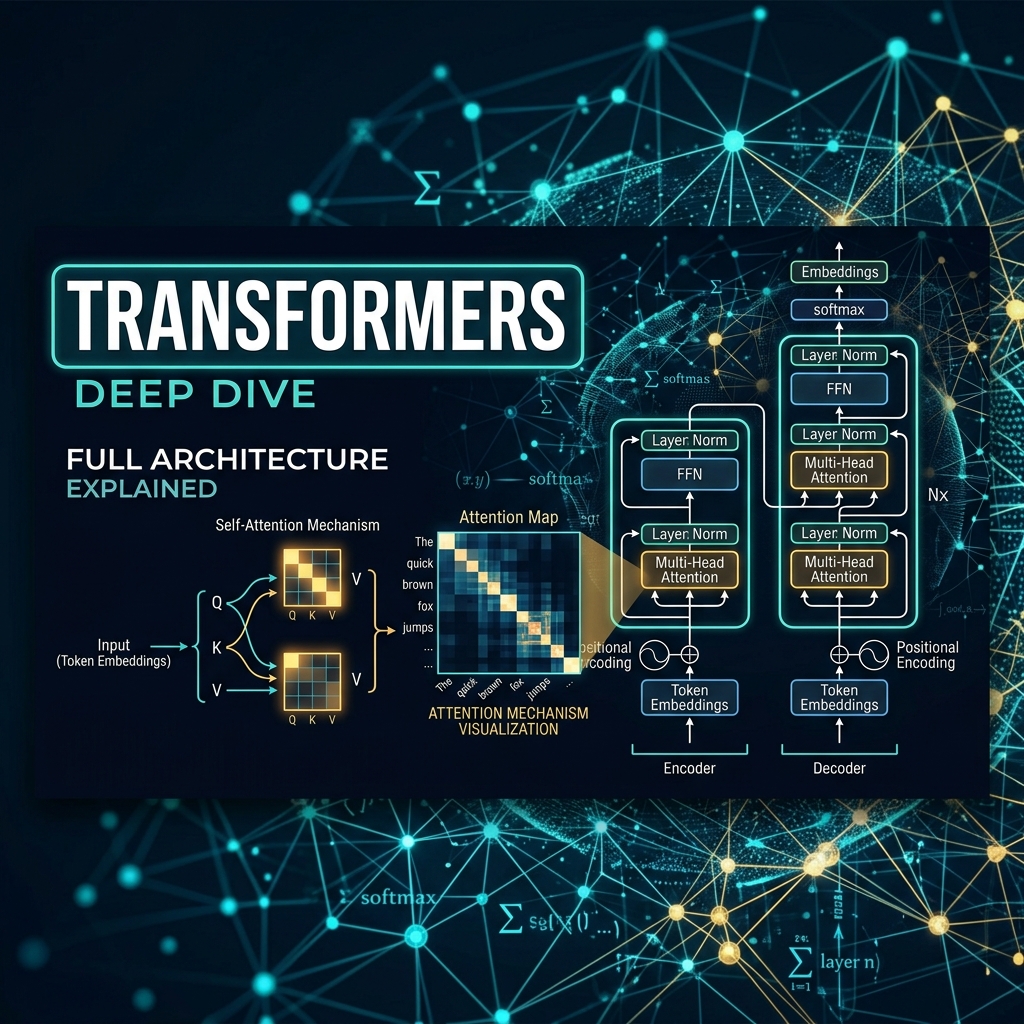
Deep dive into Transformers, Diffusion models, CNNs, RNNs, and the building blocks of state-of-the-art AI.
Taking theory into practice. End-to-end coding tutorials, architectural patterns, and production deployment strategies.
Our most recommended learning paths for newcomers.
Start from scratch. Learn the necessary math and basic ML algorithms before tackling deep learning.
Start learningDive straight into modern NLP, Transformer architectures, and building applications with LLMs.
Start learningHow AI works: A deep dive into Attention mechanisms, Positional Encoding, and how the Transformer changed the landscape of Natural Language Processing.
We believe that true understanding comes from building. Our content bridges the gap between academic theory and practical engineering, ensuring you don't just know the buzzwords, but understand the systems.
Complex architectures broken down into clear, intuitive diagrams.
Theory is always followed by implementation in Python and PyTorch.